

DMD Currently Lacks a Curative Treatment
DMD is a genetic disorder resulting in progressive muscle degeneration and early death. It affects skeletal, cardiac, and respiratory muscles, leading to progressive weakness, loss of ambulation, respiratory insufficiency, and cardiac failure leading to premature death.
Current DMD treatments have limitations and do not provide durable or significant functional improvements for patients with DMD.
~15k
DMD Patients in the United States


~300-400k
DMD Patients Globally


~60% of patients
have mutations in exons 45-55, a critical hotspot where disrupted reading frame prevents dystrophin expression
PBGENE-DMD:
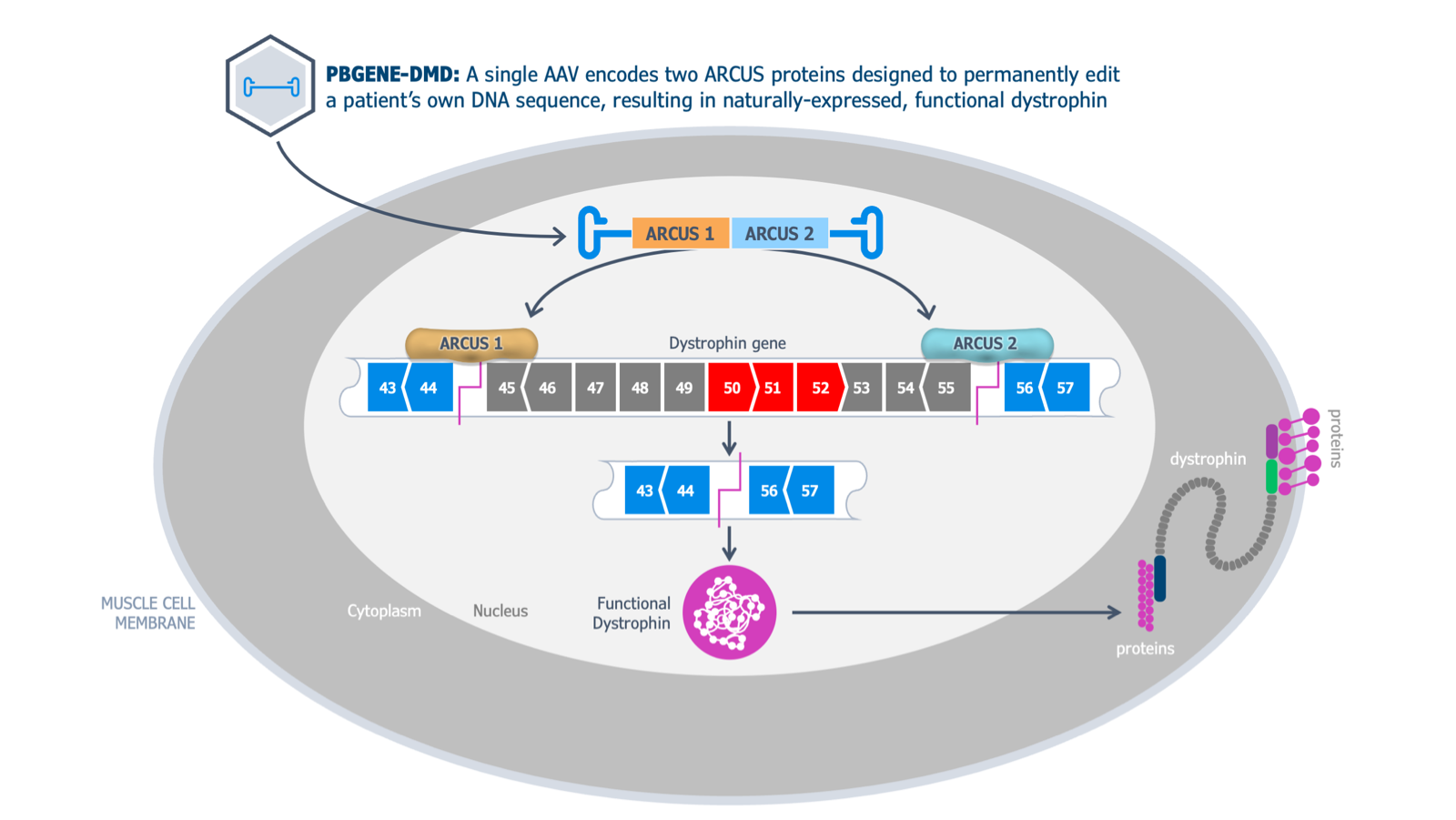
PBGENE-DMD is designed to permanently correct the root genetic cause of DMD by removing a frequently mutated region of the dystrophin gene in ~60% of patients, restoring the correct reading frame and enabling natural production of near full-length functional dystrophin.
Reasons to Believe in Precision’s Approach to DM




Clinical trial expected to initiate in 2026